


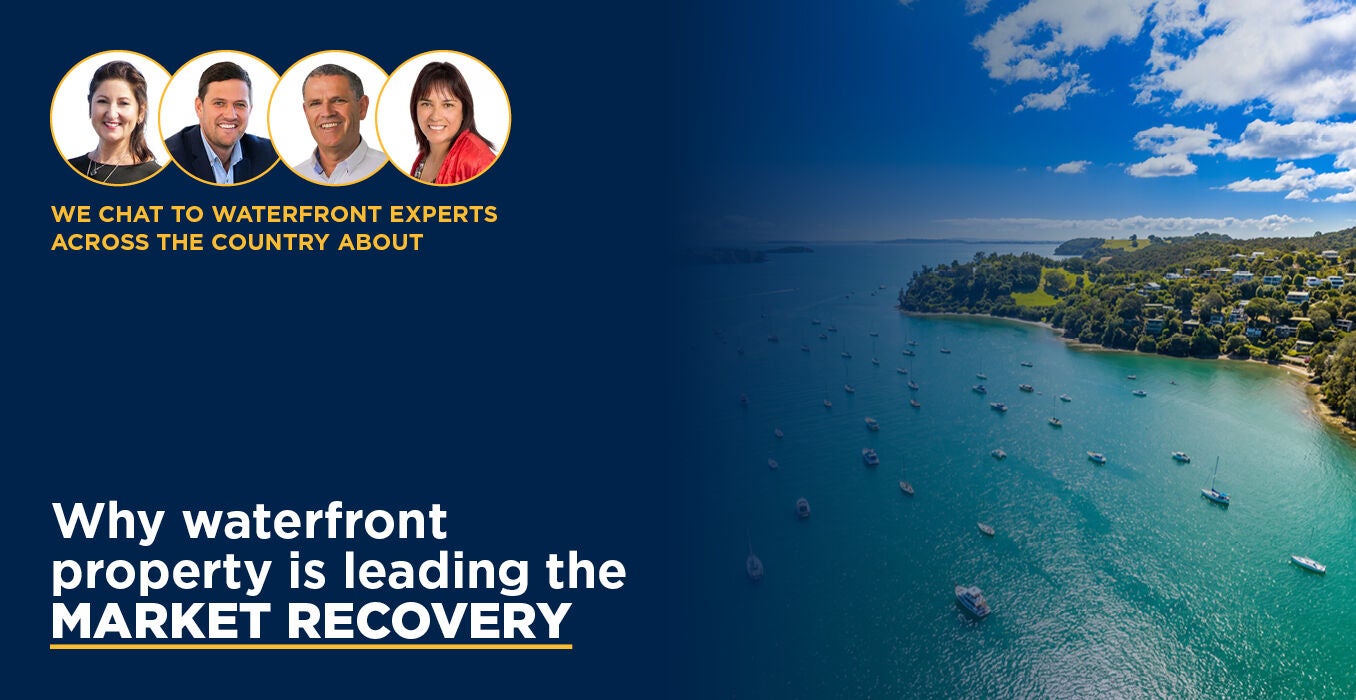
A shore thing: waterfront drives recovery
New Zealand's most coveted homes are once again setting the pace for the residential market, with waterfront properties outperforming the wider housing sector as confidence returns and buyers move quickly to secure one of the country's most exclusive assets.
While New Zealand's broader housing market continues its gradual recovery, one segment is already pulling ahead.
Bayleys' latest Waterfront Residential Market Update shows waterfront property sales increased to an estimated 1,702 transactions between April 2025 and March 2026, with an average sale price of $1.28 million after commanding an average premium of 45 percent over comparable inland properties. At a time when the wider residential market remains characterised by flat prices and abundant stock, the figures suggest waterfront property is once again proving its resilience.
The recovery comes as previously falling interest rates improved buyer confidence and more purchasers began looking beyond short-term market conditions to secure properties that rarely become available, proving that unlike the broader housing market, waterfront property has always operated according to its own rules. Bayleys Bay of Islands salesperson Irene Bremner says the appeal ultimately comes down to a simple economic principle.
"Waterfront property is one of the few assets where supply can never be increased. While new homes and subdivisions continue to come to market, no one is creating more coastline.”
"That scarcity has always underpinned long-term value, but we're also seeing buyers place greater importance on the lifestyle that comes with waterfront living. Whether it's boating, fishing, swimming or simply waking up to a spectacular outlook every morning, people are increasingly prioritising how they want to live, not just where they want to invest."
That shift in buyer priorities is reflected across much of the country.
The Bayleys report shows waterfront prices are beginning to move ahead of the mainstream residential market. Lakeside homes continue to command the highest premiums nationally, while coastal properties remain among the country's most sought-after real estate.
For Bayleys Whangamata salesperson Dale Sholson, buyer confidence has remained remarkably consistent despite broader economic uncertainty.
His team has completed several significant waterfront transactions over the past year, including Beach Road in Whangamatā, Patuwai Drive and Brambury Place in nearby Onemana, all while still maintaining a healthy pipeline of both on and off-market listings.
"There continues to be very strong interest in signature waterfront homes up to around the $5 million mark.”
"The very top end has been a little quieter through 2026, but we're starting to see encouraging enquiry return on some of our premium listings, which suggests confidence is gradually filtering back into that upper end of the market too."
The report also highlights the increasing role affluent buyers are playing in driving activity.
For Bayleys Takapuna salesperson Victoria Bidwell, many of her recent waterfront sales have been completed by buyers with significant cash reserves.
"The majority of my recent waterfront sales have been at the upper end of the market and to purchasers who aren't heavily reliant on bank lending," she says.
"They recognise this remains a buyer's market and see an opportunity to secure exceptional property before values begin moving upwards again. We've also seen a very diverse mix of buyers, from North Shore and wider Auckland families through to expat New Zealanders securing homes well ahead of their planned return, alongside new migrants from countries including Germany, Italy and China."
The renewed interest from offshore buyers is also being supported by the golden visa programme, although purchasing waterfront property often remains more complex than buying elsewhere.
Many coastal homes are classified as sensitive land forcing overseas buyers to navigate additional legal requirements before completing a transaction.
Bidwell says flexibility has become an important part of that process.
"I've worked with buyers who initially couldn't purchase their preferred waterfront property because it didn't qualify under the criteria. In one case they changed their visa pathway, allowing them to purchase a home to live in instead.”
“Others who are simply looking for a holiday home don't have that flexibility, so finding a qualifying property becomes much more challenging."
But Bremner says committed international buyers are generally prepared to work through those additional hurdles if they find the right property.
"Serious overseas buyers tend to focus first on securing a property they genuinely want, particularly given the level of capital they're investing in New Zealand," she says.
"The important step is understanding whether the property falls under the Overseas Investment Act and obtaining specialist legal advice early. Once buyers understand the pathway, they're usually well equipped to navigate the process."
At the same time, buyers are becoming significantly more sophisticated in how they assess waterfront property.
While demand remains strong, purchasers are no longer relying solely on spectacular views and lifestyle appeal. Increasing awareness of coastal hazards, geotechnical considerations and insurance requirements means due diligence has become a standard part of almost every waterfront transaction.
The Bayleys report notes that while waterfront properties continue to command substantial premiums, purchasers are becoming increasingly mindful of engineering risks such as geotechnical stability and flood sensitivity, factors that are influencing buying decisions in some locations.
Bidwell says buyers today are far more informed than they were even a few years ago.
"Climate resilience, geotechnical issues and insurance are all front of mind because buyers know that without insurance they may not be able to secure finance," she says.
"In a slower market, where properties can remain listed for longer, purchasers also tend to ask more questions about why a home hasn't sold. As a result, it's become very common for buyers to commission full geotechnical investigations before making an unconditional commitment.
“Properties with established engineering solutions provide reassurance, while clifftop homes without those protections often see buyers factor additional risk into their pricing."
Those trends are being mirrored throughout the country.
In the Bay of Islands, Bremner says buyers increasingly expect comprehensive information before committing to a purchase.
"It has become much more common to see natural hazard information referenced in LIM reports, whether that's potential slip zones on hillside sites or flood sensitivity on lower-lying coastal land.”
"That doesn't necessarily deter buyers, but it does mean they're doing far more homework. Geotechnical assessments, engineering reports and specialist advice provide buyers with confidence to make informed decisions. Ultimately, they're balancing the lifestyle benefits against any potential risks."
In Mount Maunganui, where some of New Zealand's most tightly held beachfront properties sit directly alongside the ocean, Bayleys salesperson Conrad Doyle says insurance and council planning requirements now form an essential part of the purchasing process.
"Buyers are certainly more aware of the fishhooks that can come with waterfront ownership," he says.
"One of the biggest considerations is ensuring insurance can be transferred or obtained, so vendors are increasingly providing evidence of existing cover to help reassure purchasers."
For homes along hotspot Oceanbeach Road, Doyle says buyers are routinely undertaking specialist investigations into coastal erosion zones and future building line restrictions.
"Surveyors' reports and expert advice around the 50 and 100-year coastal erosion projections have become a normal part of due diligence. Rather than discouraging buyers, it gives them greater certainty about what they're purchasing and what future development opportunities may exist."
Interestingly though, some of the perceived challenges associated with waterfront ownership continue to have less influence on committed buyers than many might expect.
In Whangamatā, Sholson says concerns around coastal erosion are often raised by observers rather than active purchasers.
"In our experience, buyers who are genuinely committed to owning waterfront property undertake their own investigations and make informed decisions," he says.
"They either satisfy themselves through expert advice or simply accept that waterfront living comes with unique considerations. Ironically, the people who talk most about erosion are often those who were never going to buy waterfront property in the first place."
Regional economic strength is also playing an increasingly important role in driving demand.
In the Bay of Plenty, Doyle says the region's thriving kiwifruit and horticultural sectors have created a steady stream of buyers looking to upgrade into premium coastal homes.
"The horticultural sector has performed exceptionally well and that's flowing through into the waterfront market," he says.
"We're also continuing to see strong demand from Waikato farmers who recognise the current market presents an excellent buying opportunity following the economic reset. More recently, we've also welcomed growing enquiry from Australian investors who are increasingly recognising both the lifestyle and long-term investment potential our region offers."
That diversity of buyer profiles reflects one of the report's key findings: waterfront property continues to attract a broader range of purchasers than many other parts of the residential market.
Some are upgrading their primary residence. Others are securing future retirement homes, holiday properties or legacy assets for future generations. Expats continue to feature strongly, while internationally mobile investors are increasingly viewing New Zealand as a stable long-term destination.
The underlying appeal, however, remains remarkably consistent and unlike many other property sectors, waterfront homes combine lifestyle, scarcity and long-term investment fundamentals in a way few other assets can replicate.
Whether overlooking an ocean, lake or river, New Zealand's waterfront properties continue to represent something increasingly difficult to find: a finite lifestyle opportunity with enduring appeal. And as the market enters its next phase of recovery, that combination of scarcity, resilience and lifestyle appears set to ensure waterfront real estate remains among the country's most sought-after property sectors for years to come.
Thinking about buying or selling waterfront property?
With unmatched local knowledge and a track record across New Zealand's most sought-after coastal, lake and riverfront locations, Bayleys' waterfront specialists can help you navigate every step of the process. View our current waterfront listings to find your next lifestyle opportunity.

Author - Chris Farhi
Head of Insights, Data and Consulting
Chris leads Bayleys’ Insights team, transforming residential, commercial and rural market data into actionable property insights. An award-winning consultant, he specialises in real estate strategy, complex transactions and financial analysis.

Contact us


