


Country -
Different cycles, new opportunities
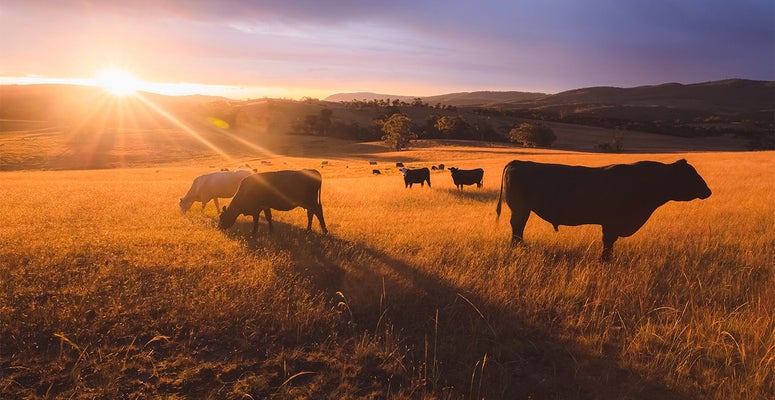
Bayleys' trans-Tasman relationship with Australian real estate group McGrath is providing fresh insight into how rural property markets are responding to changing economic conditions on both sides of the Tasman.
Trans-Tasman insights for rural property owners
While Australian farmers have spent much of the past decade expanding and consolidating landholdings amid rising values and strong access to debt, New Zealand's rural sector has more recently worked through a period of adjustment that has tested debt structures, investment decisions and business resilience.
The differing experiences are shaping buyer sentiment and farm ownership trends in both countries, while providing useful lessons for rural business owners considering growth, succession or restructuring.
Bayleys chief operating officer and national director rural Duncan Ross says the company's ability to compare trends across both markets has strengthened since Bayleys and global property consultancy Knight Frank jointly acquired a controlling stake in McGrath Estate Agents in June 2024. The relationship gives Bayleys’ clients access to market intelligence, buyer networks and property expertise on both sides of the Tasman, while creating opportunities to connect buyers and sellers across New Zealand, Australia and beyond.
Ross recently returned from meetings with McGrath's rural team and says the differing market cycles on either side of the Tasman are reinforcing the importance of disciplined borrowing, investment and succession planning.
Australia's decade of farm expansion
McGrath rural salesperson Scott Petersen says farm listings in his area are on par with last spring but he’s sensing more caution and slightly fewer active buyers searching for rural property.
He is based in the New South Wales city of Orange, a renowned wine and popular pastoral farming region about 250km west of Sydney.
Petersen says total farm lending in Australia significantly increased between 2022 and 2025, lifting 18 percent from $120.5 billion to reach $142.5 billion in a post-Covid surge of sales fuelled by ambitious farm owners seeking to scale up their businesses.
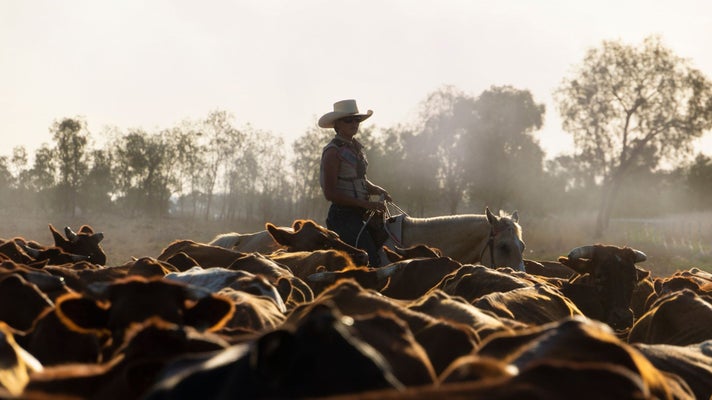
Scale and growth drive Australian farm investment
“A lot of that growth was driven by farmers buying additional country and investing in their businesses. The resulting higher land values also gave established farmers more equity and borrowing capacity,” he says.
Petersen says the debt-funded burst of sales activity in those first couple of years after the global pandemic were among the best he has seen in his career in real estate.
“I think there was a realisation that scale can make a farming business work better. You've already got your machinery, your staff and your management systems, so adding more land doesn't necessarily mean everything else has to grow at the same rate.”
“There's also a strong competitive element to it. If you've spent 20 or 30 years building a good operation and the property beside you becomes available, you naturally want to have a serious look at it. We've seen plenty of farmers take those opportunities when they arise,” he says.
Petersen says farmland values in Australia have plateaued for the past couple of years, but the gains since the Covid pandemic period mean equity levels have improved and balance sheets are in better shape to endure the upward pressure on costs, particularly fuel and fertiliser, and livestock feed, should the El Nino weather hit as hard as is being predicted.
He is not expecting to see much change in land values, given the challenging outlook and the sharp rise in values earlier in the decade.
Buyer caution emerges as conditions change
“Farmers have become just a little cautious at present, they are crunching the numbers more than before when they are looking at farms that come on the market,” he says.
He says the arable sector in Australia is under pressure from weaker export market returns, but for pastoral farmers, the strength of beef and lamb markets is driving steady interest in suitable farmland.
“Australian farmers are enjoying the strong export prices for beef and lamb, and wool’s not going too badly either. But we’re really powered by grass and if we get a good spring, that feeds into the confidence of buyers.” He knows of some large-scale farming operations where the owners could easily be budgeting on spending $2 million-plus on feed to cover themselves through a lengthy dry period.
“But if the spring is a good one and we get follow-up rains, then some will start looking to invest that money in buying more land.”
How New Zealand and Australian rural markets differ
In contrast, total rural debt in New Zealand has been relatively stable for the past five years, sitting at about $65.2 billion in the July 2026 report posted by Statistics NZ, up 2.4 percent from July 2024.
Ross says the Australian experience highlights how different the two markets have been in recent years.
He says farm ownership consolidation has occurred on a much larger scale in Australia than in New Zealand, partly because Australian farming businesses generally require significantly more land to create an economically productive unit.
"The Australian market has benefited from a prolonged period of rising land values and strong borrowing capacity, but it also hasn't experienced a substantial correction or widespread drought for several years," he says.
"That naturally raises questions about how highly leveraged businesses would perform if conditions became less favourable."
Ross says New Zealand farmers and lenders have already worked through a correction and returned to more prudent investment settings.
"As confidence improves, we're seeing a window of strengthening buyer activity for farm owners considering succession, retirement or restructuring. There is liquidity available in parts of the market, but farmers shouldn't assume current commodity returns, buyer demand or financing conditions will persist indefinitely."
Stronger balance sheets support rural resilience
Rabobank New Zealand country banking general manager Bruce Weir says farming in New Zealand is “just in a different cycle” than Australia which has been through a period of massive ownership consolidation.
He says balance sheets for most New Zealand farming businesses, particularly in the sheep-beef and dairy sectors, are stronger than ever which adds more resilience to cope with downturns in markets or weather events.
“Any farm businesses expanding now also has the opportunity to include more risk mitigation in place, like milk futures and interest rate mitigation, so that will help them too. Most farmers also take a long-term view so they are able to lean on their balance sheet to get through a downturn,” he says.
He expects that to be the case if the El Nino weather predictions are accurate for both New Zealand and Australia this summer.
Succession challenges on both sides of the Tasman
Petersen says Australian farm owners are also encountering the same succession challenges faced here in New Zealand.
The growth in land values this decade has added more complexity to the discussions around kitchen tables among farming families, he says.
“A lot of farming families are now dealing with businesses and landholdings that are worth much more than they were a generation ago, so dividing everything equally between the children isn't always practical.”
But he is also seeing succession being discussed earlier than before, which is helping to create flexible ownership structures which improve outcomes.
Rural finance brokers play a growing role
Ross says his recent visit also highlighted an emerging trend across the Tasman – the involvement of specialist rural finance brokers who work with farm owners and the banking sector.
Petersen says brokers are becoming a more common part of the conversation, particularly for larger farm purchases.
“It can be useful to have someone who understands the farming business and can look at what different lenders might offer.”
Petersen says farmers have often had a very close relationship with their bank and their local rural manager, and plenty still do. But he says there is much more choice in the lending market now, and brokers can help farmers navigate that.
“From what we're seeing, brokers are certainly becoming more involved in larger or more complicated transactions,” he says.
Contact us


